Tattoo Art Font Review
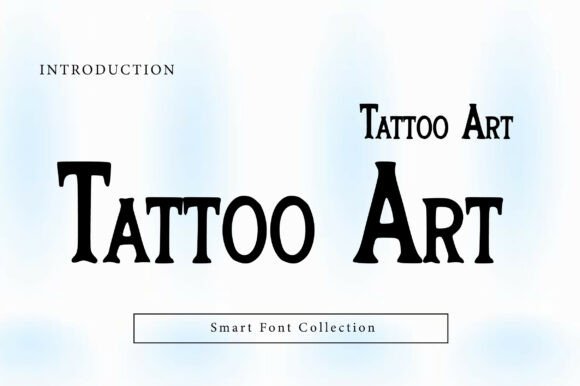
Choosing the right font for a project can feel like selecting the perfect piece of jewelry for an outfit—subtle, but essential. When I was redesigning a lifestyle blog’s header, I found myself drawn to Tattoo Art, a bold, expressive display serif font that carries the spirit of old-school tattoo lettering. Its strong strokes and decorative curves brought a vintage edge that felt both authentic and modern.
Visual Character and Editorial Appeal
Tattoo Art has a distinct personality. It doesn’t just sit on the page—it commands attention with its confident, hand-crafted aesthetic. The font’s rhythm is deliberate, with a balance of thick and thin strokes that create a sense of movement. Its curves are ornate but not overly complicated, giving it a timeless quality that feels at home in both digital and print formats.
This typeface works well when used as a focal point. Whether it’s a headline, a pull quote, or a cover title, Tattoo Art adds visual interest without overwhelming the reader. Its editorial appeal lies in its ability to evoke a sense of history and craftsmanship, making it ideal for projects that want to feel personal and authentic.
Real-World Publishing Use Cases
I tested Tattoo Art in a few different layouts. For a recipe ebook, it made the title stand out while maintaining a warm, inviting tone. In a wedding guide, it added a touch of elegance to section headers and captions. When used in a printable planner, the font’s boldness helped define key sections without sacrificing readability.
It also performed well in newsletter graphics, where its decorative nature complemented illustrations and icons. However, I noticed that when used in smaller sizes or in dense text blocks, the details began to blur, making it less effective for body copy.
Readability and Practical Considerations
While Tattoo Art is a premium font, it’s important to consider its limitations. On screens, especially mobile devices, the fine details can be hard to distinguish if the font size is too small. For print materials, it works best when used in larger sizes, such as headlines or cover text.
For long-form content, Tattoo Art is better suited as a decorative element rather than a primary text font. It pairs well with more readable serif fonts for body copy or clean sans serif fonts for captions and navigation. This contrast helps maintain visual hierarchy and ensures the message remains clear.
Designing with Tattoo Art
When using Tattoo Art in editorial design, it’s helpful to think about the mood you want to create. For a lifestyle blog, it can add a sense of personality and flair. In a coaching workbook, it can serve as a visual anchor for key concepts. In a digital magazine, it can elevate the cover and section titles, creating a cohesive brand identity.
Font pairing is crucial. A simple, neutral font like Georgia or Lora can provide a solid base for body text, while a modern sans serif like Montserrat or Open Sans can work well for subheadings and captions. This combination allows Tattoo Art to shine without competing with other elements.
Commercial Use and Licensing
Before integrating Tattoo Art into any project, it’s wise to check the licensing terms. If it’s intended for commercial use—such as in ebooks, templates, or client publications—the font should have the appropriate license. Some fonts may require additional permissions for specific applications, so it’s always good to verify.
Also, consider the file formats included. Many fonts come in multiple styles, including regular, bold, and italic, which can expand their usability. Ligatures and alternates can add variety and help avoid repetition in design work.
Tattoo Art is a versatile tool for designers looking to add character and authenticity to their projects. Whether it’s for a blog header, a cookbook title, or a printable guide, it brings a unique energy that can elevate the overall aesthetic. But like any powerful design element, it requires thoughtful application to ensure it enhances—not detracts from—the reader’s experience.
Final Thoughts
In the world of typography, there are fonts that blend in and fonts that make a statement. Tattoo Art belongs to the latter. It’s a font that speaks, that tells a story, and that can transform a simple layout into something memorable. For those who value style, personality, and a touch of vintage charm, it’s a valuable addition to any design toolkit.